

This content is for general information and does not replace diagnosis or personal treatment advice. Medical decisions must be made by a licensed clinician.
Key takeaways
- Recovery is not linear; swelling may fluctuate during the day and across different periods.
- Returning to work is not the same as complete tissue healing. Looking socially recovered does not mean the nose is ready for impact or strenuous exercise.
- Cross-border plans should document flight clearance, early review, urgent contact, and the photo schedule after return.
What can you expect in the first 24–48 hours after rhinoplasty?
An external splint or tape may support the nose, and internal support may be used in selected cases. Pressure, congestion, swelling, and bruising around the eyes can occur. Technique, bone work, skin thickness, and individual healing affect their extent. Before discharge, obtain written instructions for medicines, food, wound care, and urgent contact.
Follow only your surgeon's directions on head elevation, nasal care, cold application, and prescribed medication. Do not add generic internet advice to your plan because it may not fit the operation performed. Use the clinic's urgent route for an unexpected or rapidly worsening symptom, breathing difficulty, or bleeding that is not controlled as instructed.
Week one: Splint, bruising, sleep, and review
The first week focuses on rest and protecting the nose from impact. Timing for splint or suture removal depends on the operation and should be managed by the care team. Bruising varies widely. Daily comparisons on social media are unreliable because lighting, makeup, filters, anatomy, and surgical extent change appearance.
Ask for personal instructions on sleep, showering, face washing, tooth brushing, glasses, and contact around the nose. Early review should assess more than splint removal; the wound, breathing, swelling, and general wellbeing matter. A companion can help with routine needs and reduce accidental impact and fatigue during the first days.
Continue readingAesthetic surgery guide: What to know before you decideWeeks 2–4: Returning to work and social recovery
Bruising and obvious swelling may improve through the first weeks, but the nose is not at its final appearance. Desk work may be possible before a job involving exertion or impact risk. Return should be planned around energy, medicines, commuting, and job conditions, not appearance alone.
Gentle walking is not the same as strenuous exercise. Do not apply a generic schedule to bending, lifting, running, swimming, or contact sports. The surgeon should provide staged clearance based on the operation. Ask specifically about glasses pressure, sun protection, and skincare because bone and soft tissue can remain vulnerable after you look socially recovered.
Months 1–3: Why can swelling look uneven?
Swelling does not look identical every day. Morning hours, activity, temperature, and tissue characteristics can affect appearance. The nasal tip may retain oedema longer in some people. Interpreting small early asymmetries as the final result can create unnecessary anxiety; use standardized photographs and surgeon review.
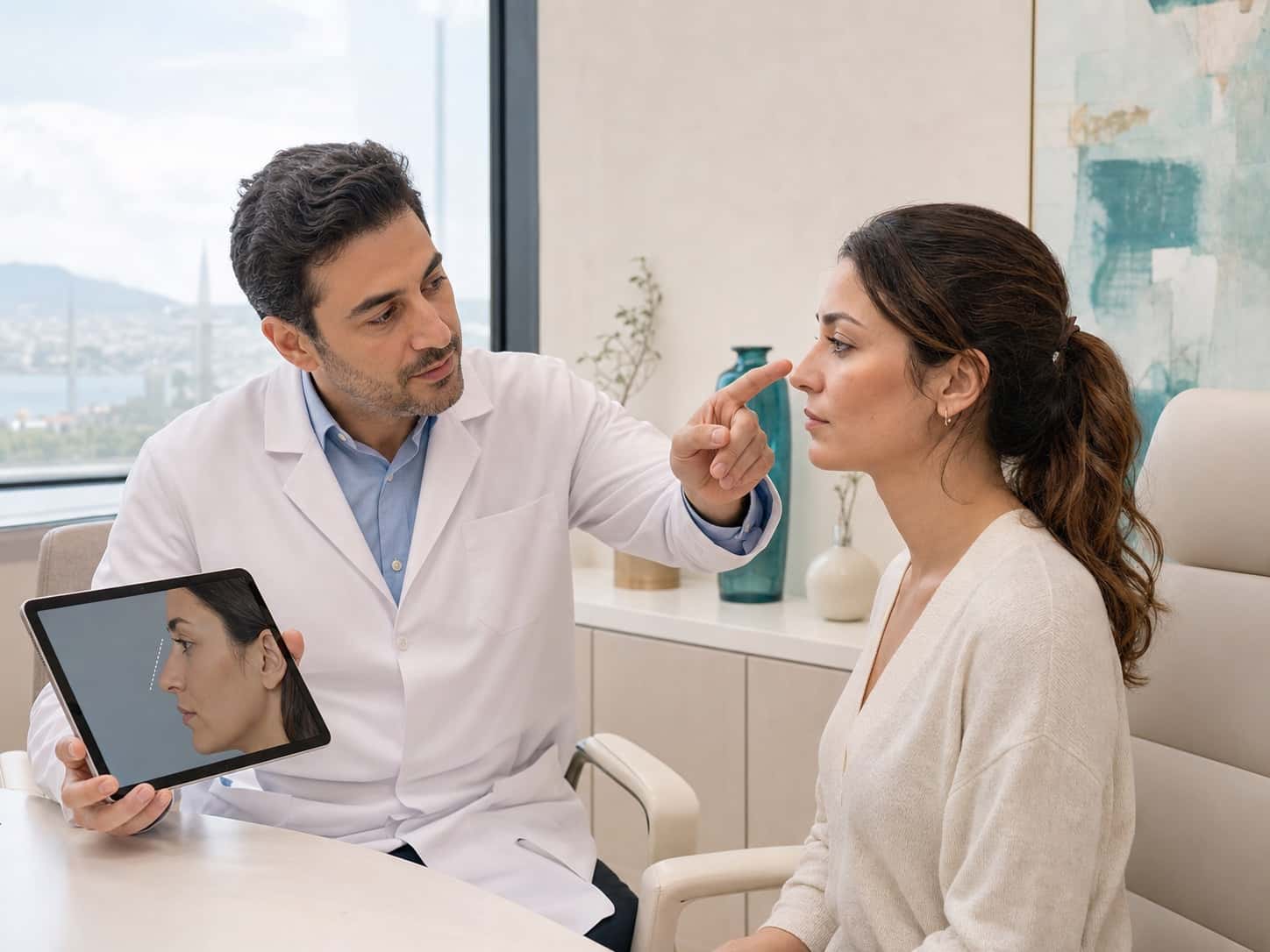
Take follow-up photographs with the same background, light, distance, and angles. Prepare front, profile, oblique, and base views as requested by the clinic. Taping or massage should be used only when personally advised. A friend's experience or social video is not an individual care instruction.
Months 6–12: When can the final result be assessed?
The American Society of Plastic Surgeons states that initial swelling may settle over several weeks, while full refinement of the new contour can take up to a year. Swelling may fluctuate during this period. Thick skin, tip work, and extensive structural changes can influence an individual's timeline.
Outcome assessment should not rely on one photograph or another person's timeline. Original goals, function, multiple views, and change over time should be considered together. Rather than deciding on revision early, allow tissues to mature; the operating surgeon should determine the appropriate review point and investigations.
How should cross-border rhinoplasty follow-up be planned?
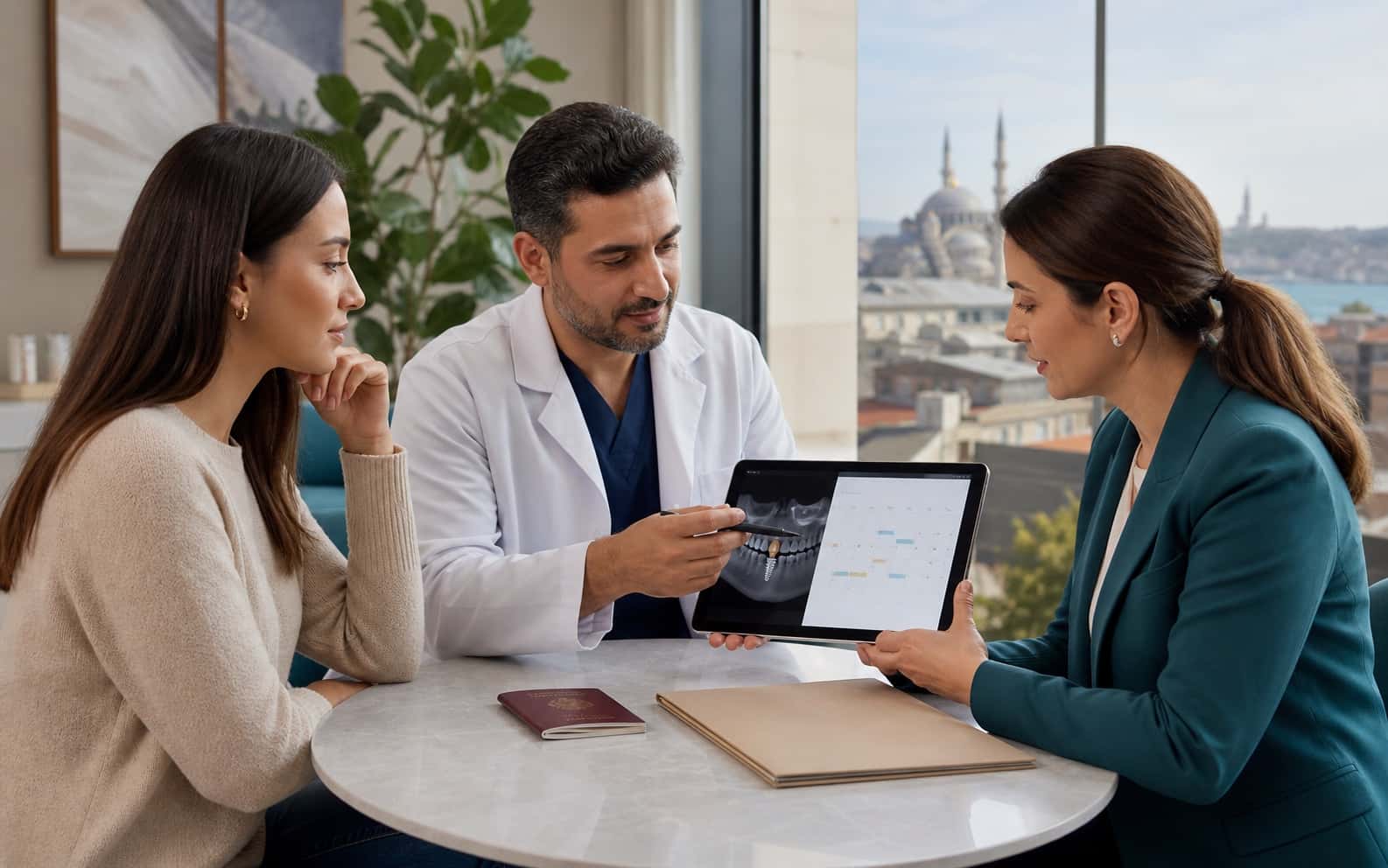
A travel plan is more than an operation date. Allow time for in-person assessment, anaesthetic preparation, early reviews, splint or suture management, and flight clearance from the surgeon. Changeable travel and accommodation with practical clinic access reduce disruption when plans need adjustment.
Turkavia does not make medical decisions; it coordinates clinic communication, transport, accommodation, interpretation, and follow-up. Before returning home, obtain the operation note, medicine list, care instructions, urgent route, and dates for sending photographs. Identify where you could seek in-person care at home if required.
- Pre-operative examination and anaesthetic records
- Early review and splint or suture plan
- Personal flight clearance from the surgeon
- A 24-hour urgent contact route
- Standard photo angles and submission dates
- Operation and medication summary for a clinician at home
Which symptoms require prompt contact with the care team?
At discharge, your surgeon should personally explain expected symptoms and situations requiring urgent assessment. Do not use an online article to self-diagnose unexpectedly increasing pain or swelling, marked breathing difficulty, bleeding that is not controlled as instructed, fever, or deterioration in general wellbeing.
Use the clinic route you were given first; for a serious emergency, seek local emergency care. Photographs and messages can support initial remote triage but cannot always replace examination. This guide supports preparation and does not determine personal risk or treatment.
Frequently asked questions
When does swelling fully resolve after rhinoplasty?
Obvious swelling may improve in the first weeks, while subtle refinement and tip oedema can last for months. ASPS notes that the final contour may take up to a year to emerge. Technique, skin, and tissue characteristics affect the individual course.
When can you return to work after rhinoplasty?
Timing differs for desk-based and physical work. Visible bruising, energy, medicines, commuting, and impact risk all matter. Ask your surgeon for an individualized return date.
Is flying safe after rhinoplasty?
There is no universal interval. Surgical extent, bleeding and swelling, review needs, and journey length must be considered. Confirm travel after explicit clearance from the operating surgeon.